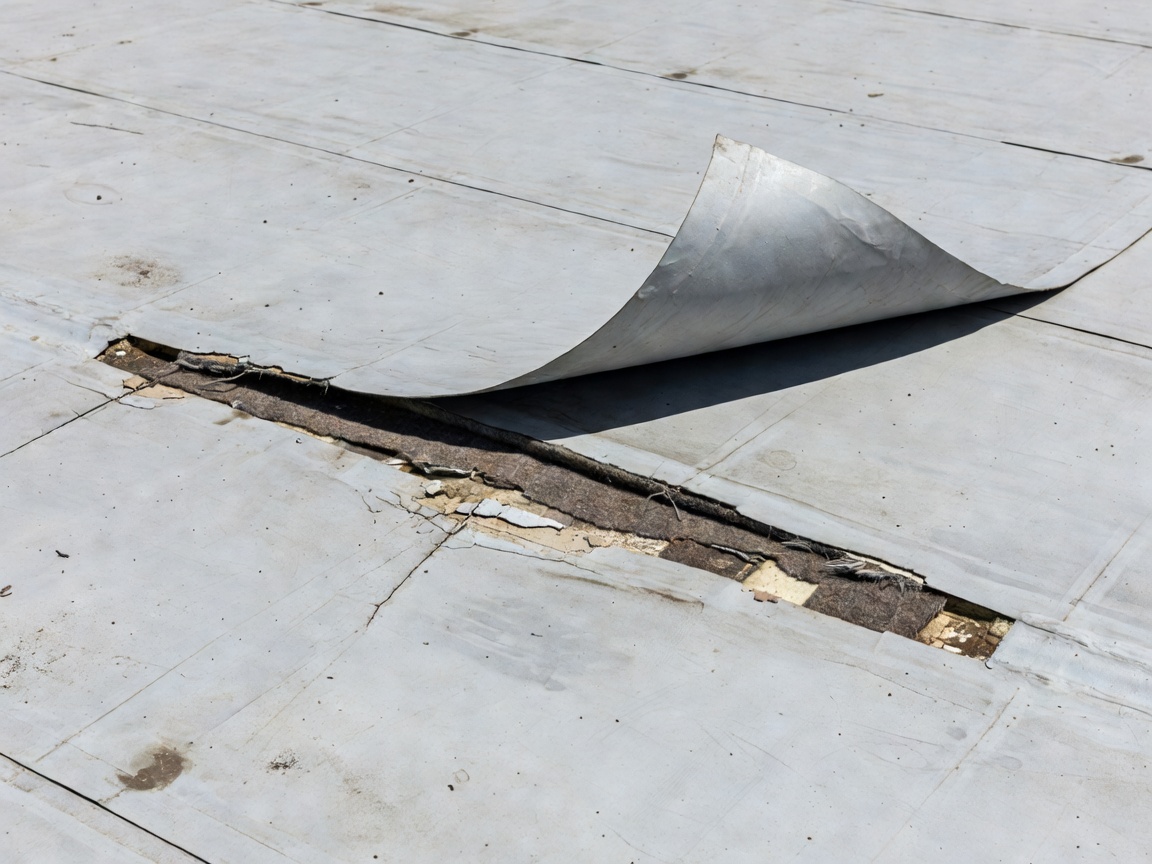
The Physical Realities of Industrial Roof Exposure
An industrial roof envelope is subject to some of the most aggressive environmental stressors encountered in civil architecture. Throughout its operating lifespan, the external skin must withstand wide thermal expansion cycles (from -10°C on frosty winter nights to +70°C on dark summer roof surfaces), relentless ultraviolet radiation, high wind suction uplifts across perimeter eaves, and acidic chemical fallout from nearby industrial extraction stacks.
When we conduct a condition assessment, we examine how each component within the layered assembly is coping with these forces. A typical modern industrial roof is rarely a homogeneous sheet; it is an engineered system comprised of structural metal purlins, vapour control layers, rigid insulation (such as PIR or mineral rock wool), outer waterproofing membranes or metal cladding, mechanical fasteners, and perimeter flashing seals. A failure in any one layer compromises the integrity of the whole.
Primary Deterioration Signatures We Scrutinise
During our multi-tiered visual and aerial evaluations, we systematically classify roof envelope findings into five principal categories:
1. Cut-Edge Corrosion on Profiled Metal Sheeting
On coated steel composite roofs, sheets are factory-cut with protective plastisol coatings. However, at overlapping end-laps and gutter discharge lines, the bare steel edge is exposed to moisture capillary action. As the factory plastisol coating peels away from the steel substratum (top-coat delamination), oxygen and moisture trigger aggressive ferric oxidation. If left unchecked, this cut-edge corrosion eats through the core metal, leading to internal leakage and loss of structural lap engagement.
2. Single-Ply Membrane Delamination & Seam Failure
Whether assessing PVC, TPO, or EPDM single-ply installations, the hot-air or solvent-welded seams are the primary failure point. Over time, plasticizer migration leads to membrane embrittlement. As the material loses flexibility, cyclic wind flutter stresses the welded laps, causing micro-voids and mechanical seam peel. We pay intense attention to T-joints, internal angle upstands, and flashing terminations around mechanical air handling plant penetrations.
3. Standing Water & Hydraulic Ponding
Industrial flat roofs are designed with intentional falls (typically 1:40 or 1:60 to achieve a minimum finished fall of 1:80). Deflection of structural steel rafters, clogged internal drainage hoppers, or compressed insulation boards create localized depressions where water gathers. Standing water does not just add dead structural weight (100 mm of standing water equals approximately 100 kg/m² of load); it accelerates chemical degradation of membranes, fosters moss and algal growth that block outlets, and creates thermal bridges.
| Defect Classification | Underlying Mechanism | Immediate Risk Factor | Structural Impact |
|---|---|---|---|
| Cut-Edge Corrosion (Lap) | Capillary moisture drawn between overlapping steel sheets peeling protective PVC layer. | Moderate: Internal drips during heavy downpours. | High: Purlin flange rust, loss of mechanical lap interlock. |
| Membrane Alligatoring | UV volatilisation of bitumen oils leading to micro-fissuring and surface cracking. | Low in early stages; water remains on surface. | Critical if unchecked: Water permeates reinforcement scrim. |
| Fastener Back-out / Rust | Thermal purlin movement pulling self-drilling screws; perished neoprene washers. | High: Wind uplift vulnerability, water ingress along threads. | Severe: Potential panel detachment during severe gales. |
| Valley Gutter Silt / Sag | Organic matter accumulation, insufficient fall gradient, blocked drop outlets. | Critical: Gutter overflow into warehouse over internal eaves. | Substantial: Water intrusion over electrical switchgear and stock. |
Evaluating Factory Skylights (GRP & Polycarbonate)
In manufacturing facilities and logistics hubs, translucent rooflights are essential for daylighting. However, they represent the single most fragile element of the envelope. During condition assessments, we evaluate fiberglass blooming (where resin weathers away, exposing raw glass strands), UV yellowing, surface crazing, and impact fracture patterns from hail or environmental debris. Furthermore, we flag any un-matted or non-fragility-rated skylights that represent immediate occupational fall hazards to on-site maintenance contractors.
The Assessment Synthesis
A rigorous condition assessment avoids vague observations like "the roof looks satisfactory for its age." We compile exact square-metre measurements of affected membranes, linear meterage of corroded end-laps, and volumetric estimations of ponding areas. By establishing these hard, quantitative baseline metrics, we empower facilities managers to benchmark degradation rates across successive years and allocate remediation budgets with complete commercial confidence.